
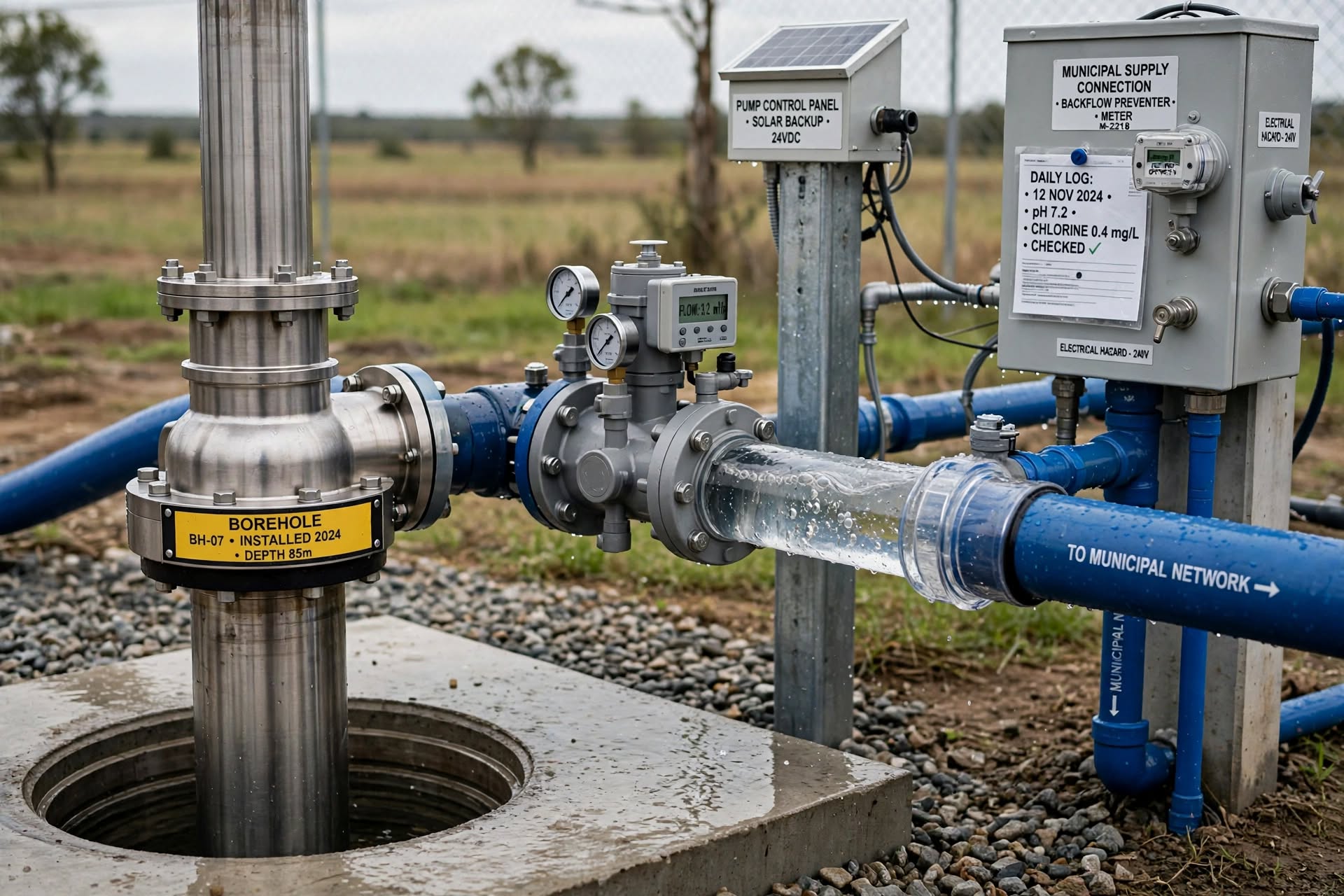
Water rationing has pushed thousands of Nairobi households and businesses toward borehole water — but many assume that once they’re off the municipal grid, sewer bills disappear too. That’s not how Nairobi’s 2026 billing rules work, and getting it wrong can mean either overpaying or facing a nasty dispute with NCWSC later.
Here’s what property owners actually need to know, based on the current WASREB-approved NCWSC tariffs and the Nairobi City County Finance Act 2026.
The Real Trigger Isn’t “Borehole vs. Municipal Water” — It’s Sewer Connection
The single most important factor is whether your property is physically connected to the public sewer network:
- Connected to the sewer? You’ll be billed for sewerage — regardless of whether your water comes from NCWSC, a borehole, or both.
- Not connected (you rely on a septic tank, conservancy tank, or biodigester)? NCWSC shouldn’t be billing you for sewerage at all. If they do, it’s disputable, and a 2025 Water Tribunal ruling backs property owners on this point.
If You Only Have a Borehole (No Municipal Connection)
For a single domestic dwelling with no metered water source, NCWSC charges a flat KSh 350 per month. Everyone else — multi-dwelling units, commercial premises, institutions — is billed on 75% of the metered borehole volume, using a tiered rate that climbs from KSh 58/m³ at the lowest usage band up to KSh 93/m³ above 300m³.
If You Use Both Borehole and Municipal Water
This is the setup most Nairobi households are moving toward, and it comes with a useful nuance: sewerage is normally calculated only from your municipal meter reading (again, at 75% of that volume). Your borehole usage typically isn’t added into the bill unless NCWSC has specifically metered it and opened a separate account for it — which is more common for commercial and multi-unit properties than single homes.
One catch worth flagging: even outdoor use (garden, washing cars, etc.) drawn from the municipal supply still counts toward the 75% sewer calculation. Nairobi’s tariff currently has no seasonal or outdoor-use deduction.
New Costs From the 2026 Finance Act
Beyond the sewer tariff itself, borehole owners should budget for:
- A 10% conservancy (solid waste) fee added to the total water bill — but only for properties with a municipal connection
- A KSh 100,000/year commercial borehole operating permit
- KSh 15,000–20,000 water bowser permits, depending on capacity
- Separate WRA abstraction and annual charges on the borehole itself
Doing It Right If You’re Not Connected to Sewer
If your property runs on a septic tank or biodigester and isn’t likely to connect to public sewer soon, the guide recommends:
- Engineer-designed systems meeting the National Building Code 2024 and Nairobi County Public Health rules
- Proper setbacks — commonly 3m from boundaries, and 15–30m from boreholes or wells
- Regular emptying via a licensed exhauster only (illegal dumping carries heavy fines)
- Keeping approval and emptying records on file — your best defense if NCWSC later tries to bill you for sewer
Note: if a public sewer line is later extended to your area, you’re generally required to connect at your own cost.
Bottom Line
A borehole cuts your dependence on municipal water, but it doesn’t automatically cut your sewer bill. What matters is your connection status and how your usage is metered. Knowing which category you fall into — and keeping the right paperwork — is what keeps your bills accurate and disputes winnable.
This is a summary of publicly available tariff and legislative information current as of September 2026. Always confirm current rates directly with NCWSC, WASREB, WRA, and Nairobi City County before making financial decisions.